Fifteen Young Researchers Take the National Stage at Blue Schools 2026
Before they stood behind microphones at the 2026 National Blue Schools Conference, many learners had already spent months asking questions close to home. They tested water, studied aquatic life, tracked pollution and investigated how environmental change affects the places where their families and communities live. On 14 October, that work brought them to the aha Gateway Hotel in KwaZulu-Natal to present their findings on a national stage at the 2026 Blue School Conference hosted by NRF-SAEON and funded by the DSTI. The Blue School programme is part of UNESCO’s International Global Blue Schools Network.
From the rock pools and estuaries of the Eastern Cape Wild Coast, where phytoplankton diversity was examined, to investigations on fish communities in Coffee Bay rock pools, to the acid mine drainage-affected lower Vaal River in the Northern Cape, and to assessments of the risk to freshwater life, the breadth of inquiry was striking. Together, these fifteen presentations demonstrated that the Blue Schools programme is producing field-ready scientists who are asking hard questions about the water systems their communities depend on.
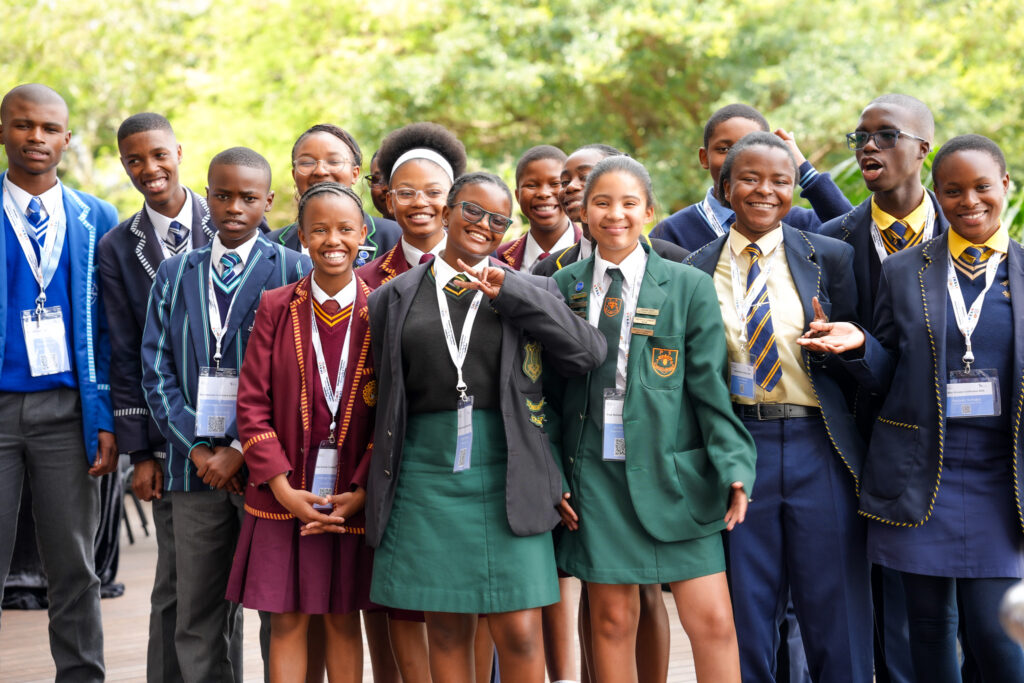
Learners from schools across South Africa gather at the 2026 National Blue Schools Conference in KwaZulu-Natal.
The National Blue Schools Programme is open to South African learners in Grades 6 to 11. Participating schools register with NRF-SAEON, and educators guide learners through ocean-literacy portfolio activities before helping them develop a research project connected to the ocean. For some learners, that connection begins at the coast. For others, it begins with a river, dam, school tap or catchment hundreds of kilometres inland. The conference is the culmination of a year-long journey that began in February 2026. Hundreds of learners across the country enrolled in the Blue Schools programme, completed a portfolio of ocean-literacy activities, designed and submitted individual research proposals by April, then collected data — in rivers, estuaries, wetlands and even school grounds — and submitted final research reports by 29 July 2026. The programme challenges learners in Grades 6 through 11 to move beyond textbook theory and engage with real environmental problems in their own communities. Whether a learner lives in an inland township, a farming region, or a coastal suburb, the programme asks the same question: how does the ocean affect your life, and what can science do about the threats it faces?
The 2026 cohort took that challenge seriously. Research projects presented during the conference addressed an impressive breadth of themes: freshwater and marine water pollution, the ecological health of South African estuaries, the impacts of plastic debris on marine and estuarine ecosystems, the economics of noise pollution on the marine environment, and the blue-carbon potential of coastal vegetation.
Learner Research Takes Centre Stage
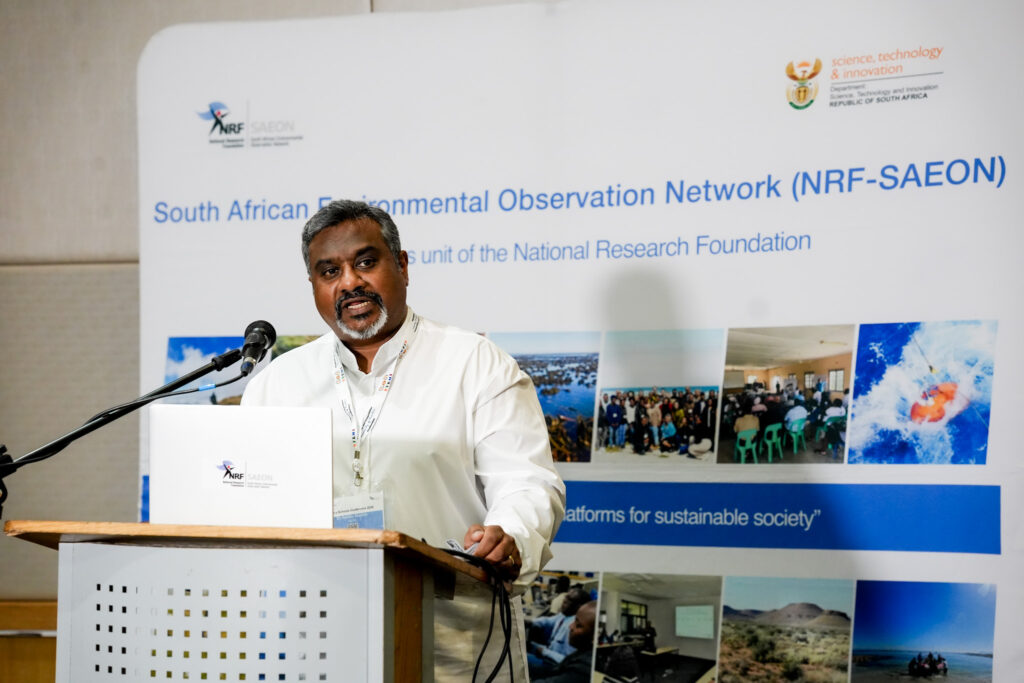
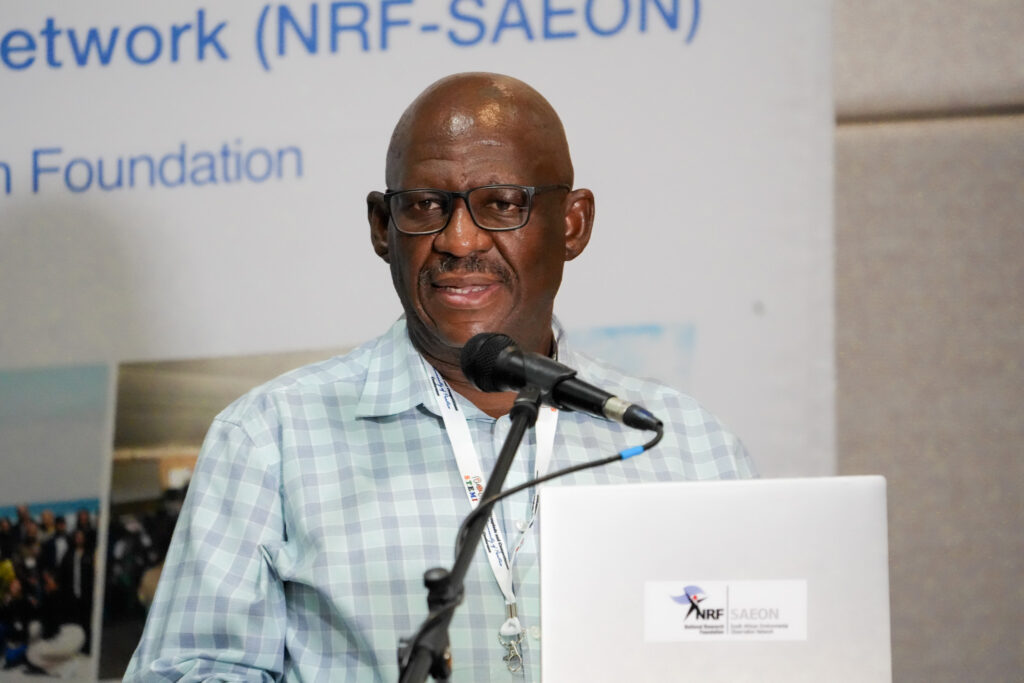
NRF-SAEON Managing Director Dr Ashley Naidoo opened the programme by welcoming learners, educators, guests and partners to a day centred on learner-led science. Dr Gilbert Siko (Acting Chief Director: Science Missions & Director: Marine and Polar Research, Palaeosciences) delivered the keynote address and highlighted the importance of research in strengthening our understanding of the marine world. After reviewing the learners’ abstracts, he congratulated them on the high standard of their scientific projects and described them as the next wave of scientists whose work is helping to bridge the gap between oceans and people.
NRF-SAEON Managing Director Dr Ashley Naidoo welcomes learners, educators, guests and partners to the 2026 National Blue Schools Conference.
Dr Gilbert Siko (Acting Chief Director: Science Missions & Director: Marine and Polar Research, Palaeosciences) delivers the keynote address at the 2026 National Blue Schools Conference, highlighting how learner research strengthens understanding of the marine world and helps bridge the gap between oceans and people.
The 15 presentations reflected the different ways in which inland, river, estuarine and coastal environments are connected. Learners investigated topics including phytoplankton in the Nenga Estuary, seasonal zooplankton changes in Algoa Bay, fish diversity in Coffee Bay rock pools, blue carbon in the Swartkops Estuary, ocean acidification, plastic pollution, acid mine drainage, flood impacts and new approaches to water filtration.
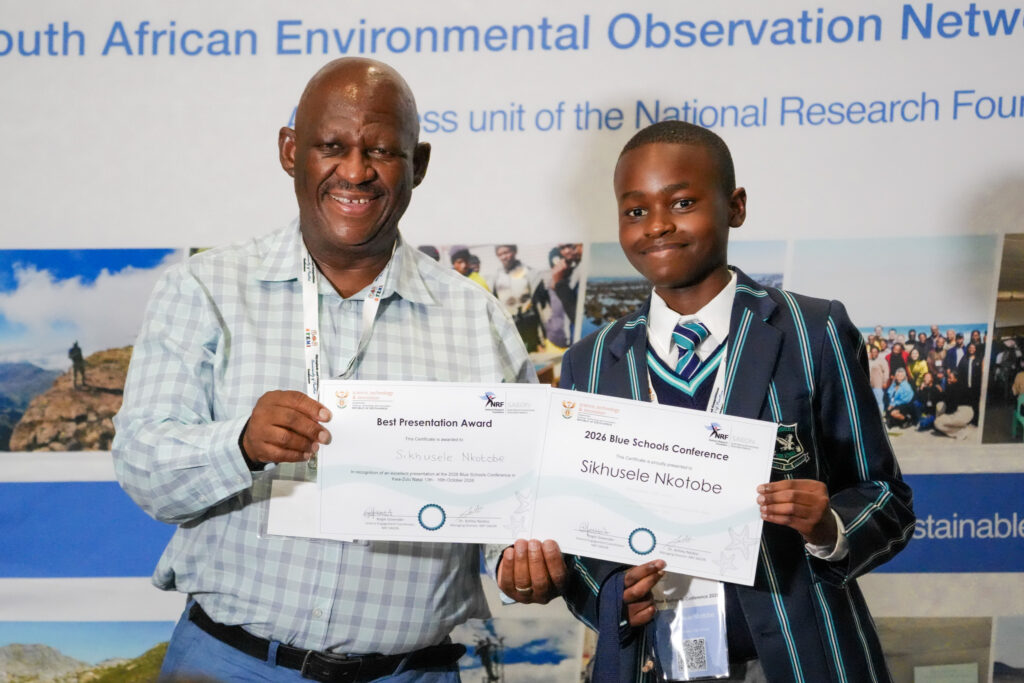
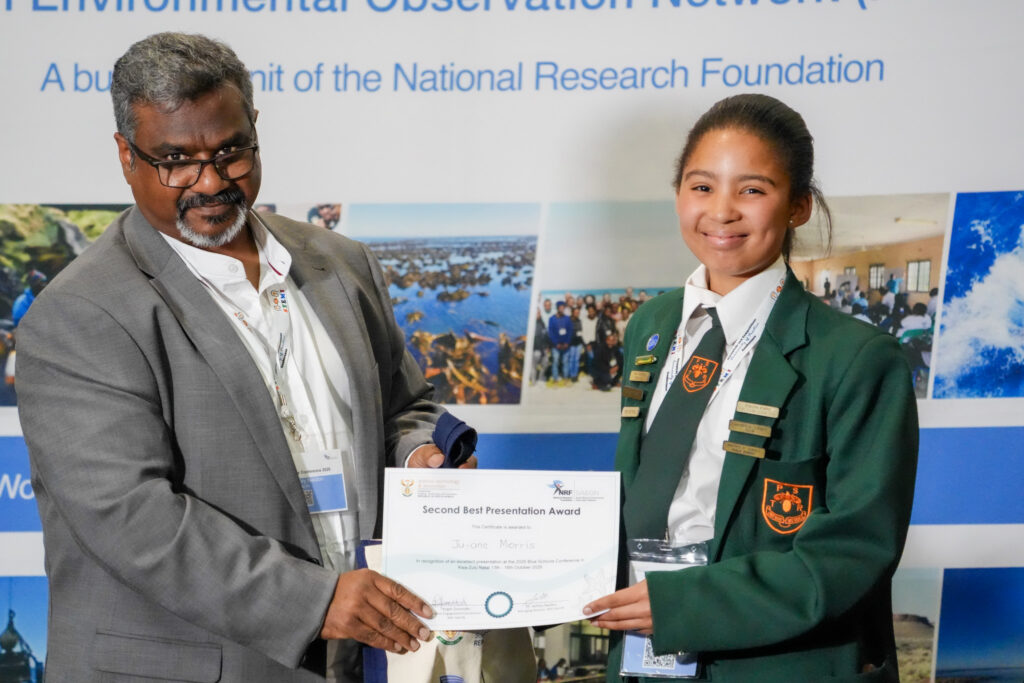
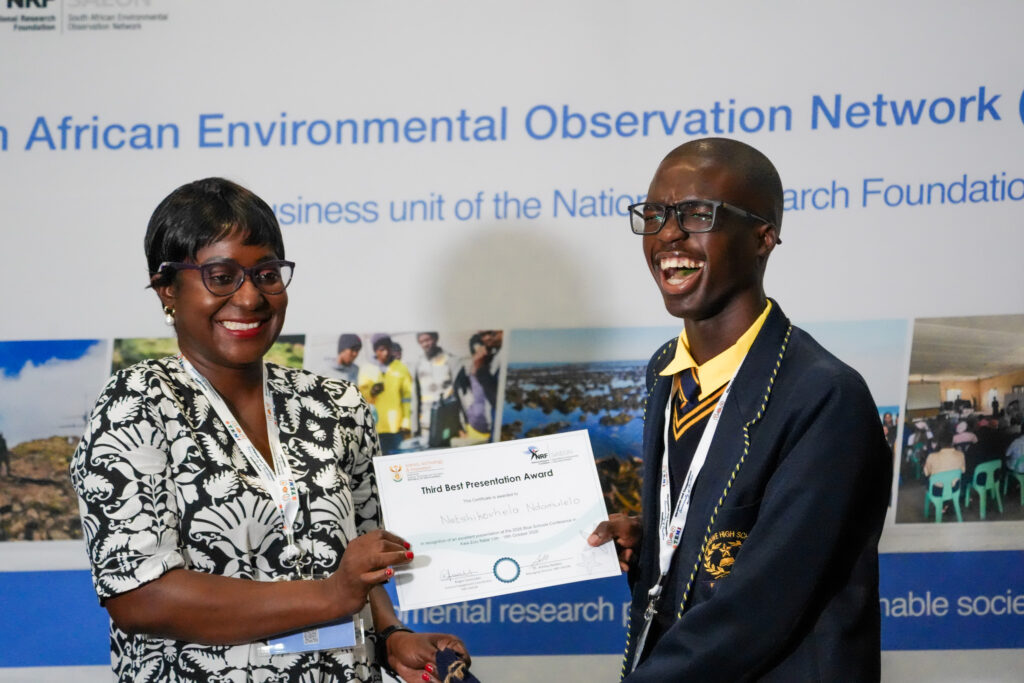
Sikhusele Nkotobe, a Grade 8 learner from Ndzondelelo High School, received first place for the Carbo-S Polymer project, which tested the material’s potential for water filtration and soil water retention. Ju-ane Morris, a Grade 7 learner from Touwsrivier Primêre Skool, placed second for an investigation into water quality at three local schools following concerns about brownish tap water. Third place went to Netshikovhela Ndamulelo, a Grade 11 learner from Thengwe High School, whose research examined how floods, runoff, erosion and nutrients affect water quality at Nandoni Dam.
First-place winner Sikhusele Nkotobe of Ndzondelelo High School receives the Best Presentation Award at the 2026 National Blue Schools Conference.
Second-place winner Ju-ane Morris of Touwsrivier Primêre Skool receives the Second Best Presentation Award at the 2026 National Blue Schools Conference.
Third-place winner Netshikovhela Ndamulelo of Thengwe High School celebrates receiving the Third Best Presentation Award at the 2026 National Blue Schools Conference.
By the end of the conference, each learner had completed a journey from a question raised at school or in the community to a national scientific presentation. The awards recognized the three strongest presentations, but all fifteen learners had explained their methods, received professional feedback and shown that meaningful research can begin with careful attention to the water and environments people encounter every day.