In celebration of National Science Month, the South African Environmental Observation Network (NRF-SAEON), together with Nelson Mandela Bay Science and Technology Centre, organised an exciting, hands-on beach practical activity for learners in Grades 9 to 11. On 16 July, Pollock Beach in Gqeberha became an open-air science laboratory during the winter school holidays. The day’s goal was to introduce learners to simple tools and methods that can be used to answer big scientific questions. The activity for the day focused on meso- and microplastics, which can be found in all environments, specifically on the beach in this case, and the simple methods which can be utilised to identify and quantify them.
Exploring the Shoreline
The group was led by NRF-SAEON Elwandle Node staff on a short one-kilometre guided beach walk. During the walk, learners were introduced to fauna and flora that can be found in coastal ecosystems. The guide shared the observations and monitoring conducted by NRF-SAEON Elwandle Node within Algoa Bay, explaining how local tides and currents shape our coastal environments and the organisms therein.
Practical activity
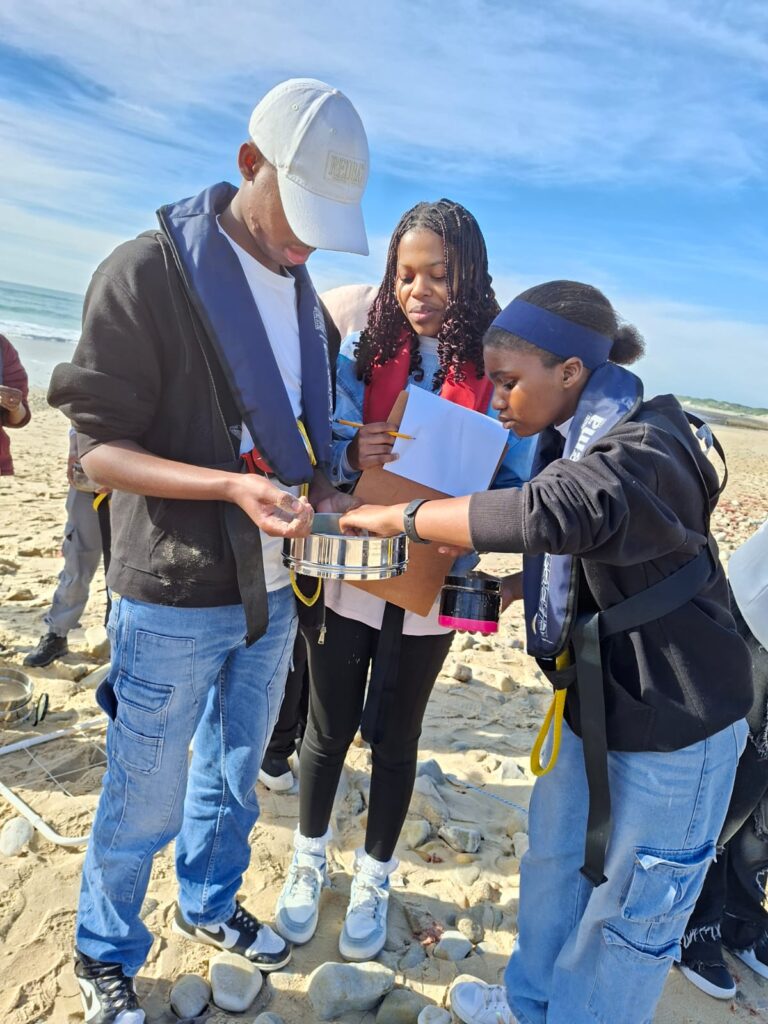
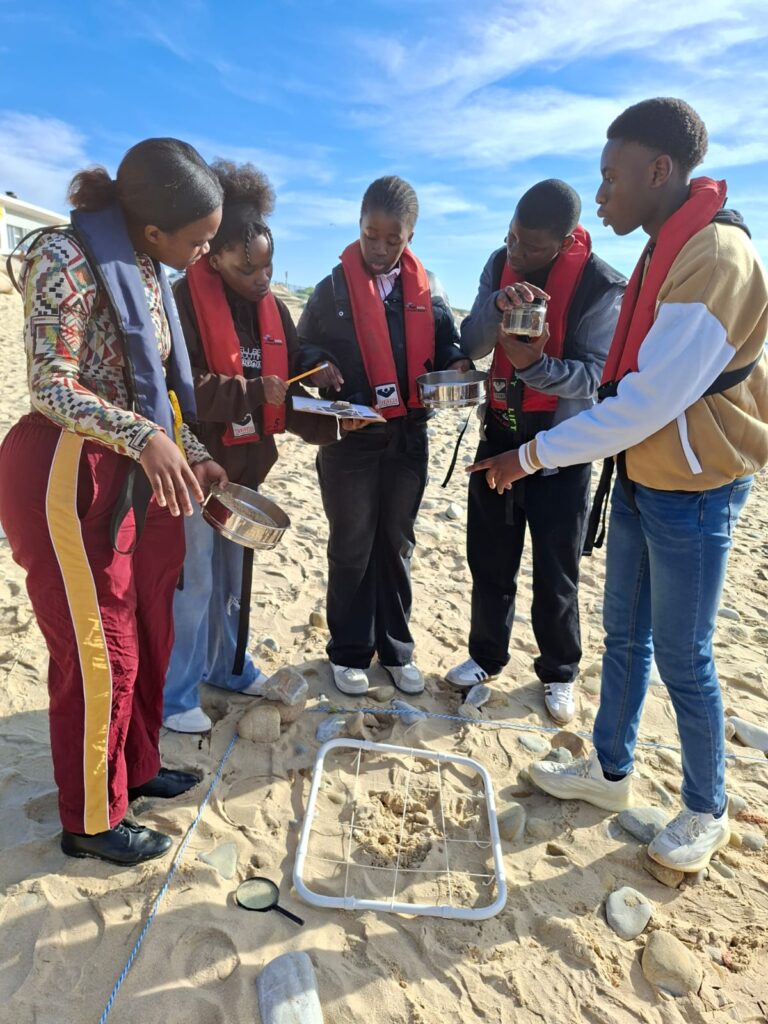
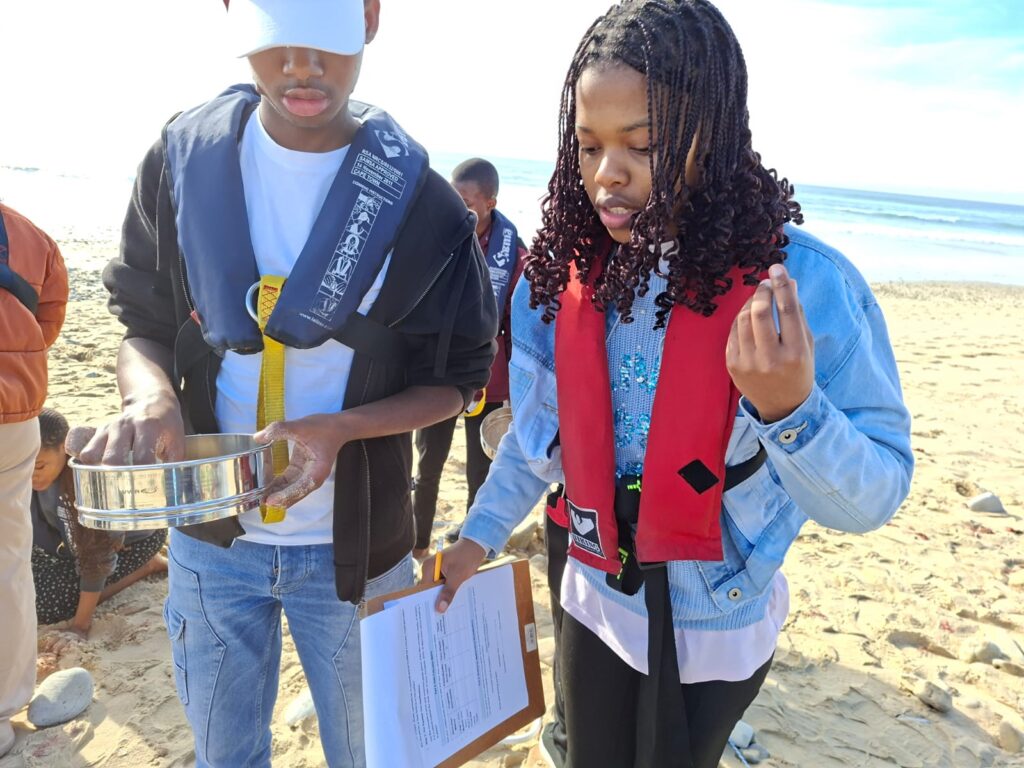
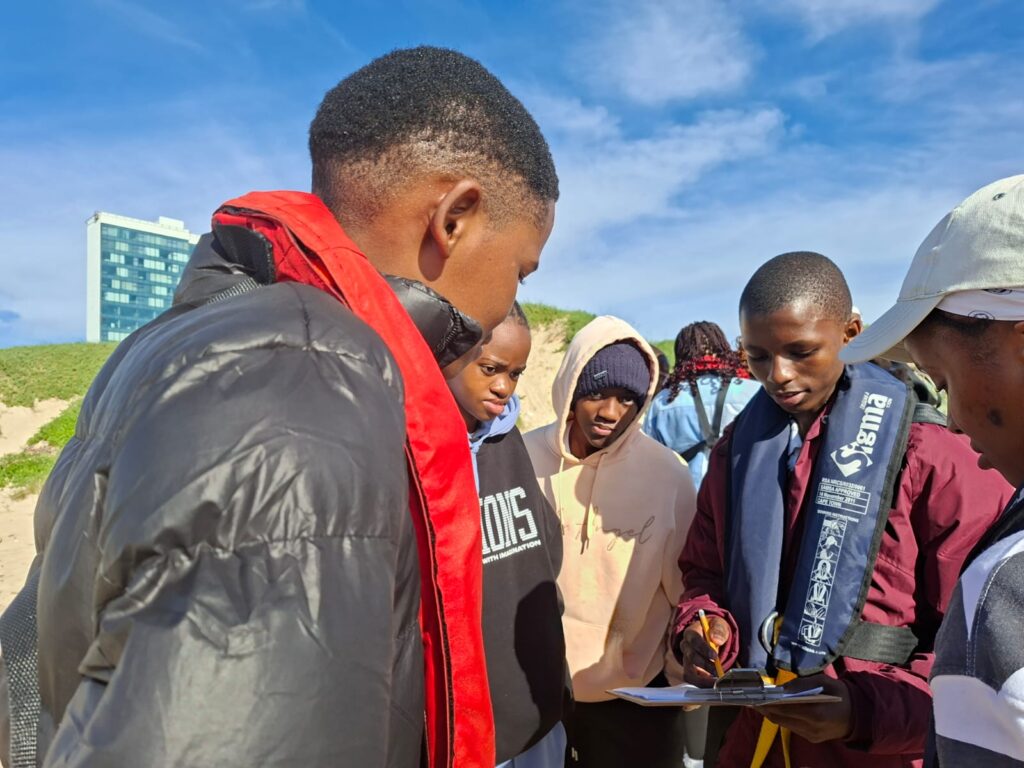
The highlight of the day was an interactive microplastics survey conducted by the learners. Working in four separate groups, learners followed user-friendly worksheets to survey the beach sand and record their findings.
To make the research manageable, the teams set up a large 4 m x 4 m master quadrat (totalling 16m2).
Instead of sifting all 16 square meters of sand, they tested smaller, randomly selected nested “mini quadrats” inside the station. A simple three-step extraction protocol was used to find and verify plastic pollution:
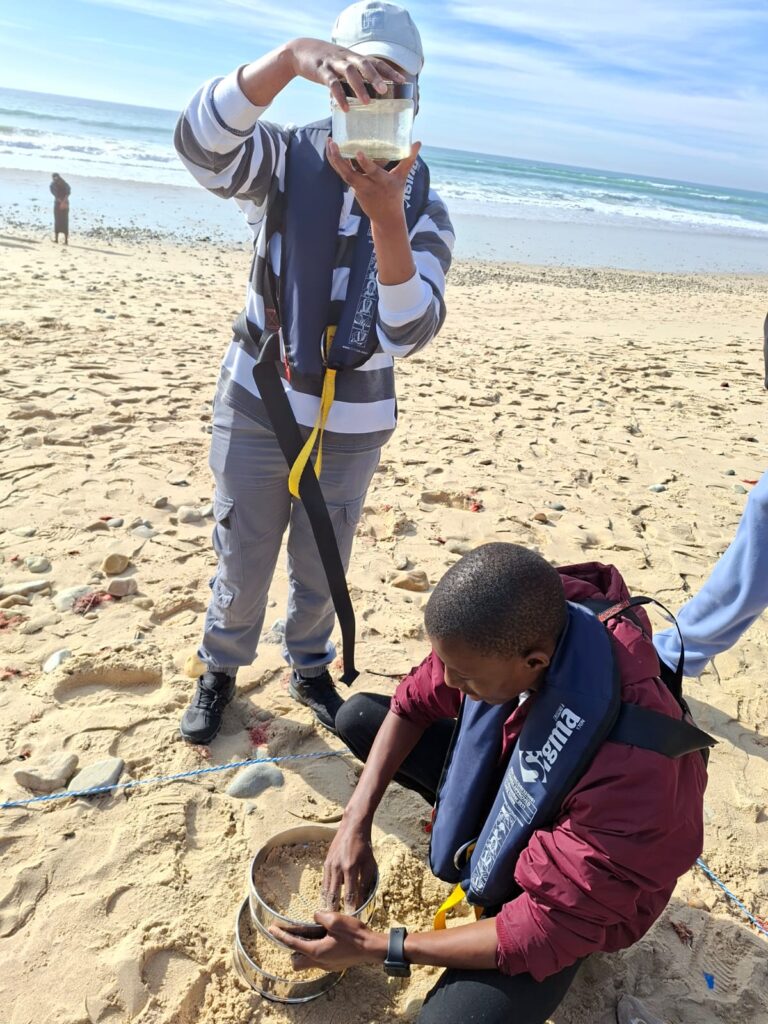
- The Sieve Test: Learners scooped up the top 2 cm of sand and gently shook it through large and fine mesh sieves to separate suspected plastic particles from organic debris.
- The Float Test (Density Separation): They mixed sieved sand with a saltwater solution in a jar, shook it vigorously, and watched to see what floated to the surface.
- The Squeeze Test (Verification): Using fine tweezers, they pinched the suspected pieces. If the item crumbled, it was natural (like shell, rock, or bone); if it bent or stayed intact, it was verified as plastic.
After sorting the plastic pieces by size and type (such as fragments, pellets, films, and fibres), the learners used a formal environmental monitoring formula to estimate the plastic footprint across their entire station
This exercise introduced the learners to applied mathematical modelling or in this case oceanography practises, showing them how scientists use small samples to estimate pollution levels across much larger areas.
Anyone Can Be a Scientist
The learners thoroughly enjoyed the activity. Some groups even took initiative, running extra qualitative tests by mixing fine sediment with seawater to observe floating particles.
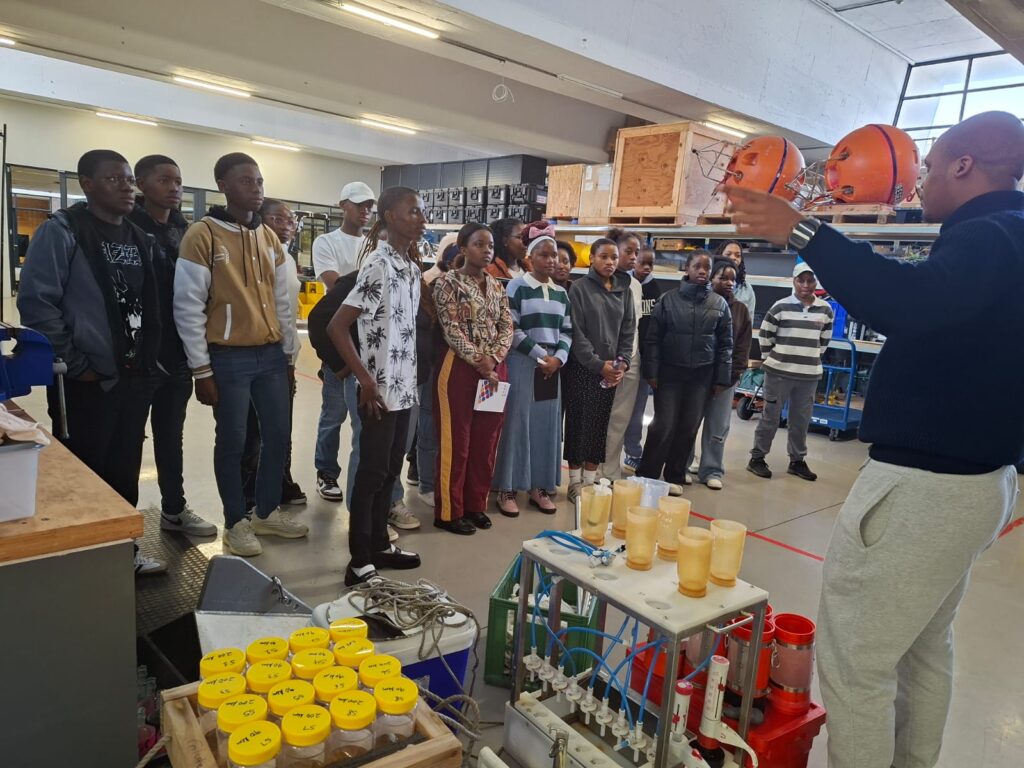
Learners processed their data and understood how easy it is to apply scientific methods to real-world problems. Learners also had an opportunity to visit the Ocean Science laboratory and technical department to understand the work scientists and technicians do behind the scenes. By the end of the day, these young researchers walked away with a better understanding of careers in ocean sciences.