South Africa played an integral role at the recent All-Atlantic Ocean Research and Innovation Alliance (AAORIA) Forum in Belgium, 25-26 September 2025, where delegates from across the Atlantic community gathered to strengthen marine science diplomacy cooperation.
The South African delegation included members of the NRF-SAEON, two early-career ocean professionals (UCT, WILDTRUST), one academic (UNISA), and two officials from the Department of Science, Technology and Innovation (DSTI). Together, they emphasised South Africa’s unique contributions to advancing ocean science while underscoring the need for stronger partnerships across Africa and the Atlantic.
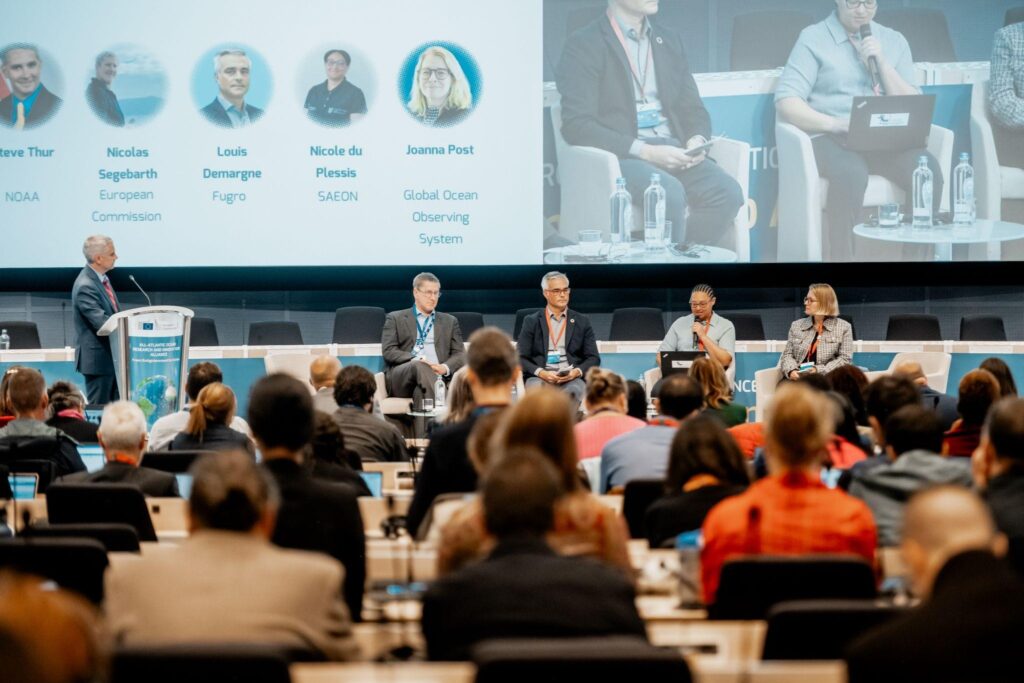
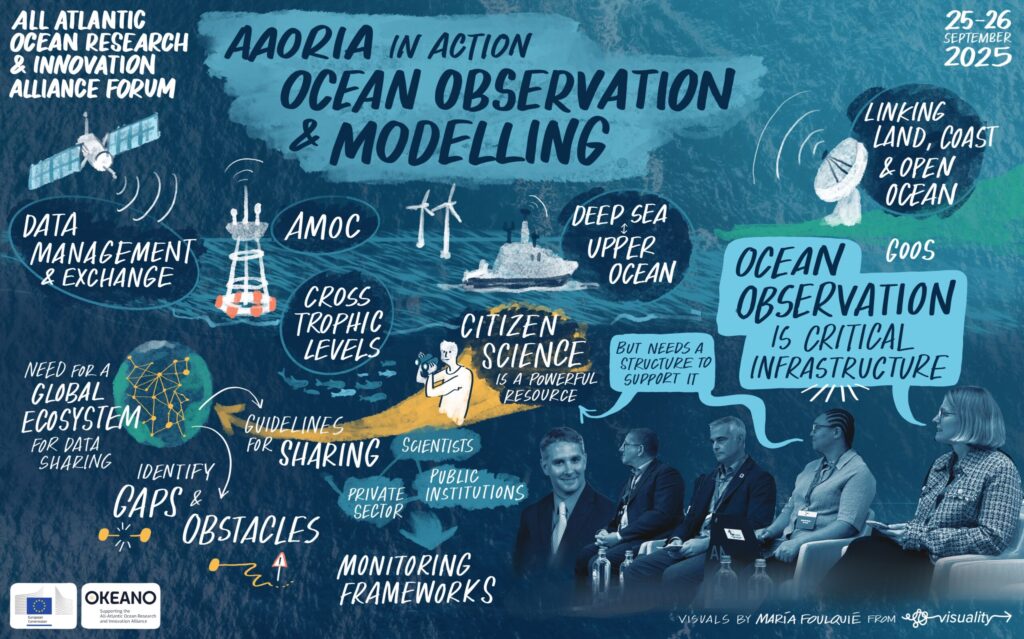
Ms Nicole du Plessis (NRF-SAEON) delivered a panel statement highlighting South Africa’s ocean observation and ocean modelling priorities, including dedicated ship access for deep-sea research, advancing cost-effective sensor development through initiatives such as the Coastal Lab in a Box (CoLab), and strengthening links between biodiversity monitoring, forecasting, and decision-making for climate resilience. She also emphasised the leadership role NRF-SAEON plays in international science diplomacy through initiatives such as the G20’s Ocean20 engagement group, which the Egagasini Node is coordinating until November.
Nicole du Plessis shares her reflections on South Africa's marine science priorities and collaborations.
A visual harvest of the panel discussion that Nicole du Plessis (NRF-SAEON) participated. Image Credit:“María Foulquié García, Visuality"
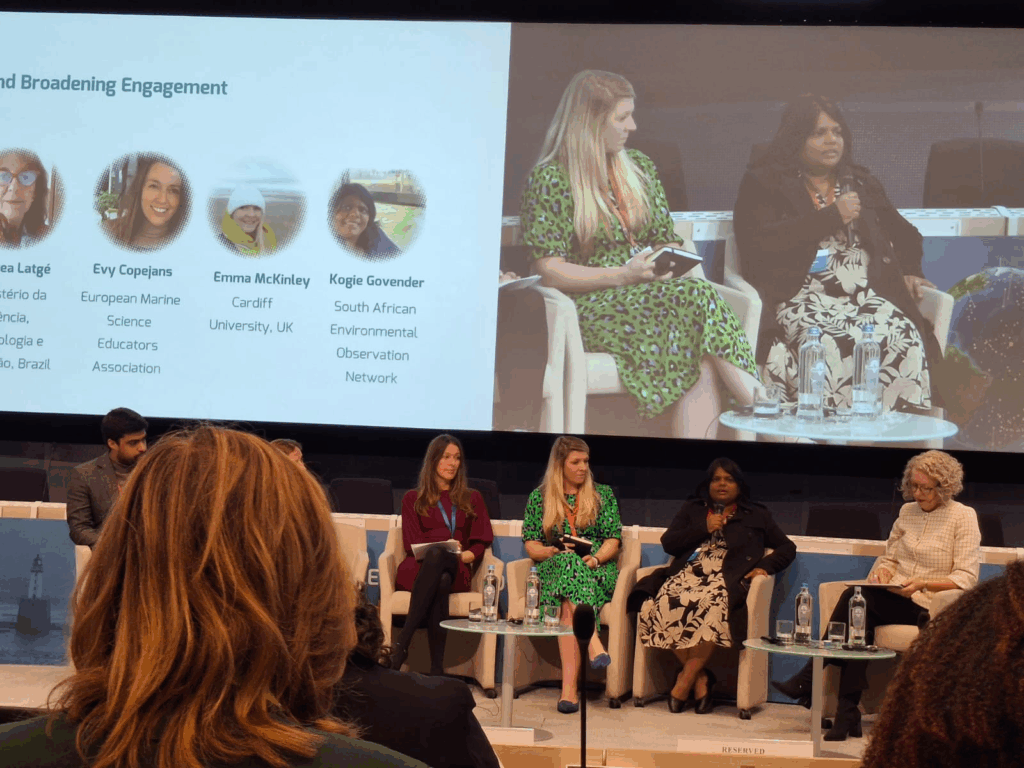
Kogie Govender (NRF-SAEON) was part of a panel discussion on Ocean Literacy during the AAORIA forum in Belgium. The discussions highlighted that indigenous communities provide unique spatial-temporal insights into ecological processes critical for conservation. Indigenous communities need to be part of the decision-making processes to foster inclusive, sustainable solutions. Building a knowledge democracy requires collaboration between Indigenous communities, scientists, policymakers, NGOs, and civil society to address research gaps and power imbalances. NRF- SAEON’s ocean literacy programmes include inland communities. By linking rivers, oceans, weather, and cultural narratives, the programme demonstrates how traditional knowledge and science can be integrated to strengthen public understanding of ocean–land–climate connections.
Kogie shared insights on the importance of first making ocean literacy accessible to school learners to ensure that we have a pipeline for Early Career Ocean Professionals (ECOPs). The case example of the All Atlantic Blue Schools Programme hosted by NRF-SAEON and funded by the DSTI has provided opportunities for both coastal and inland learners to connect with the ocean and understand how they influence the ocean and how the ocean influences them. Kogie concluded with a call for inclusive partnerships and cross-generational collaboration to integrate Indigenous knowledge and modern science in addressing complex socio-ecological issues facing the Atlantic and beyond.
Kogie Govender shares insight on the ocean literacy work in South Africa as part of the AAORIA forum.
A visual harvest of the panel discussion that Kogie Govender (NRF-SAEON) participated Image Credit:“María Foulquié García, Visuality"
Before the AAORIA forum, Kogie Govender facilitated an online science communication training for 80 international participants who are early researchers and their mentors as part of the Intergenerational Dialogue hosted by the AAORIA and the feedback from participants was very positive. The participants used the content from this training to create pitches that they presented during the All Atlantic Ocean Research and Innovation Alliance forum in Belgium. The AAORIA forum now has a difficult task of deciding which projects to fund.
Through its active participation, NRF-SAEON reaffirmed its commitment to advancing collaborative ocean science, literacy and innovation, ensuring that shared knowledge and partnerships drive solutions for a sustainable and resilient future.